
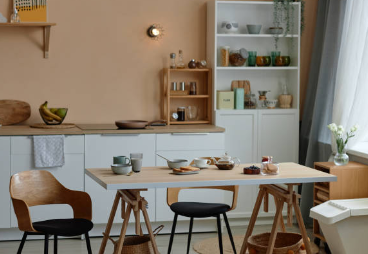
In modern kitchen design, the high cost and space occupation of traditional island countertops often make small-sized homeowners feel troubled. An innovative layout concept is gradually becoming popular: replacing traditional island tables with multifunctional dining tables, which can save space and budget while injecting a warm and lively atmosphere into the kitchen.
In kitchen design, abandon the conventional island table and choose to customize a vintage wooden dining table. This decision stems from a deep optimization of spatial functionality: the dining table not only serves as a countertop for meal preparation and cooking, but also serves as a social center for daily dining and gatherings, especially suitable for families without independent restaurants. By using wooden dining tables and open shelves in the same color scheme as the cabinets, the space presents a coordinated overall feeling, allowing the dining table to naturally blend into the kitchen layout and avoid abruptness.

The advantages of this design scheme are obvious: firstly, the placement of the dining table is more flexible, and its position can be adjusted according to the kitchen layout, especially suitable for narrow or irregular spaces. Round or oval dining tables can also reduce pressure, ensure aisle width, and maintain smooth flow. Secondly, the natural texture of wooden dining tables adds a warm atmosphere to the kitchen. Compared to cold island tables, they are more suitable for family gatherings or friend gatherings, and the comfort of dining chairs far exceeds that of island table stools. In addition, compared to the high cost of customizing island tables, there is a wider range of dining table options, from affordable finished products to vintage second-hand models, making it easier to control costs while also combining practicality and aesthetics.
The key to implementing this plan is to choose a stable and compatible dining table. Prioritize solid wood or metal materials with sturdy structures to ensure they can withstand daily use. In terms of height, try to choose a style that is close to the height of the island (about 36 inches) to reduce bending discomfort during operation. At the same time, by unifying materials or colors, the coordination between the dining table and the overall style of the kitchen is strengthened, combined with elements such as open shelves and decorative chandeliers, further enhancing the sense of spatial integration.

The design of replacing the island table with a dining table is not only an innovation in spatial planning, but also redefines the function of the kitchen. It transforms the kitchen from a single cooking place to a multifunctional home center, saving costs and increasing space temperature. Whether it is a small kitchen or an open layout, this flexible design concept provides new possibilities for kitchen renovation.